18. Pulmonary Hypertension, Acute Cor Pulmonale, and Massive Pulmonary Embolism
Acute massive pulmonary embolism (PE) and chronic pre-capillary pulmonary hypertension (PH) impose severe afterload stress on the thin-walled right ventricle, generating distinctive mechanical strain patterns on surface electrocardiography.
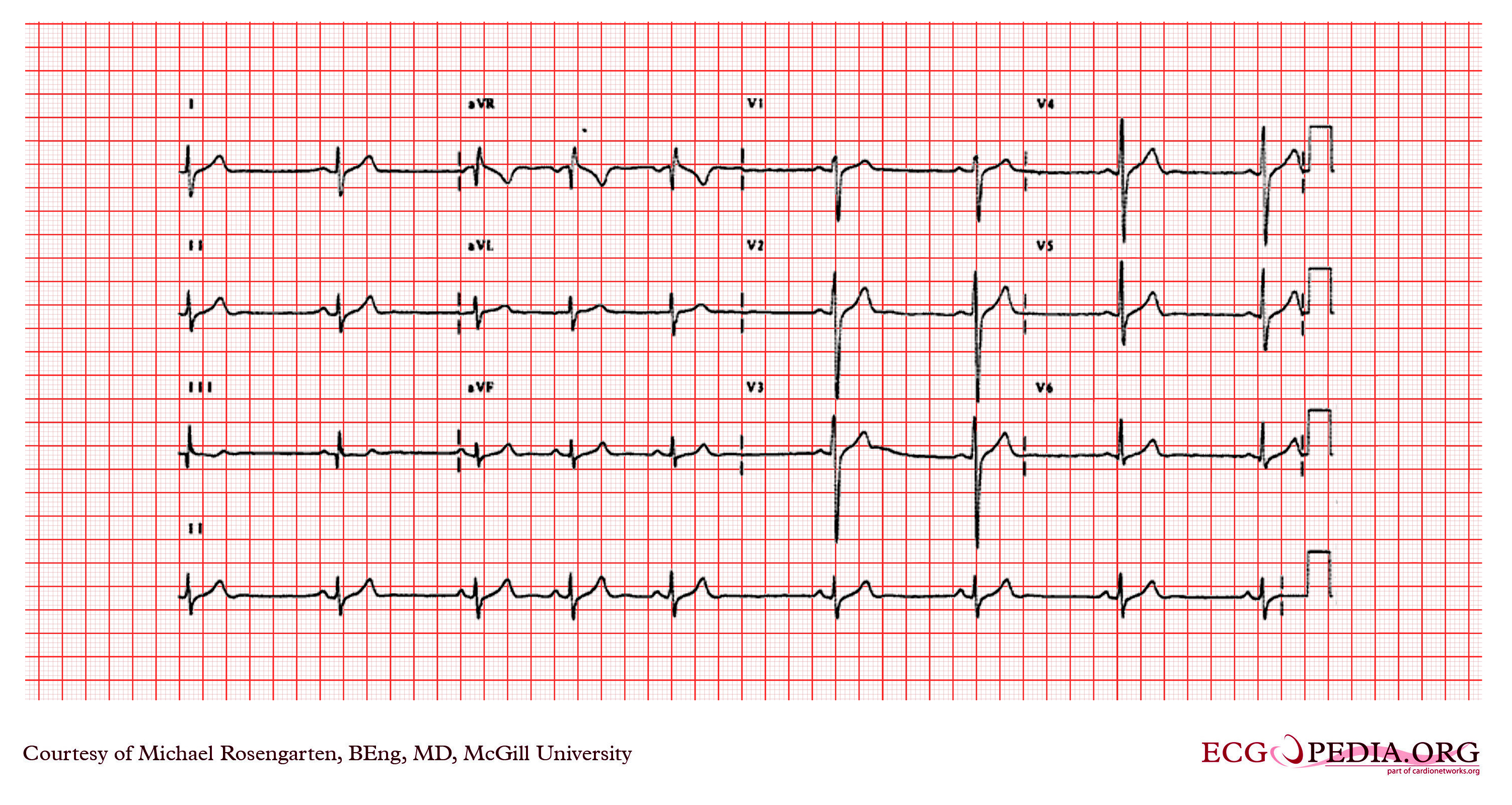 Figure 18.1: Classical McGinn-White S1Q3T3 pattern in Acute Pulmonary Embolism demonstrating deep S in lead I, pathological Q in lead III, and inverted T in lead III. Rendered with solid white background.
1. Electrocardiographic Signatures of Acute Pulmonary Embolism
| Electrocardiographic Finding | Sensitivity & Specificity | Electrophysiological Mechanism |
|---|---|---|
| Sinus Tachycardia | Most common finding ($>45\%$); non-specific. | Sympathetic surge to maintain cardiac output. |
| McGinn-White Pattern ($S_1Q_3T_3$) | Sensitivity $\sim 20\%$, Specificity $>85\%$. | Deep $S$ in Lead I, $Q$ in Lead III ($>1.5\text{ mm}$), and inverted $T$ in Lead III due to acute right ventricular axis shift. |
| Simultaneous Precordial ($V_1-V_4$) & Inferior (II, III, aVF) T-Wave Inversions | Highest specificity ($>95\%$) for massive PE. | Severe acute transmural right ventricular ischemia and mechanical strain. |
| Acute Right Bundle Branch Block (Complete or Incomplete) | Indicates large thrombus burden with acute RV dilatation. | Acute mechanical stretch of the right bundle branch along the interventricular septum. |
| $S_1S_2S_3$ Pattern | Deep S waves across leads I, II, and III. | Extreme clockwise rotation of the cardiac axis in the horizontal plane. |
2. Multimodality Diagnostic Investigations
- Computed Tomographic Pulmonary Angiography (CTPA): Gold standard for anatomical clot visualization and RV/LV diameter ratio calculation ($\text{RV/LV} > 1.0$ indicates acute RV strain).
- Bedside Echocardiography (TTE): McConnell's Sign (RV free wall akinesia with sparing of the apex) and 60/60 Sign (pulmonary acceleration time $<60\text{ ms}$ with peak systolic TR gradient $<60\text{ mmHg}$).
3. Evidence-Based Emergency Management Protocols
- High-Risk (Massive) PE with Hypotension / Shock:
- Systemic Thrombolysis: Alteplase (rtPA) $100\text{ mg}$ IV infusion over $2\text{ hours}$ (or $50\text{ mg}$ rapid bolus during cardiac arrest).
- Catheter-Directed Embolectomy: For patients with absolute contraindications to thrombolysis.
- Anticoagulation: IV Unfractionated Heparin ($80\text{ U/kg}$ bolus $\to 18\text{ U/kg/hr}$).